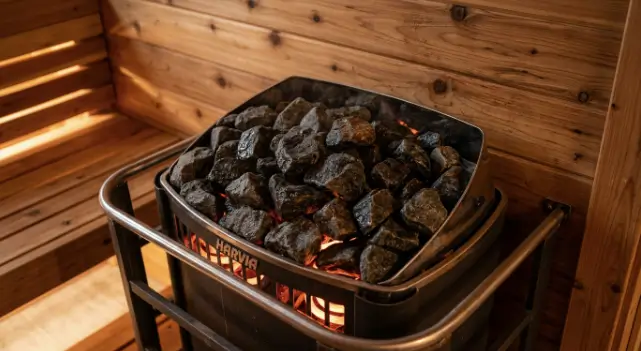
An electric sauna heater install comes down to three things: a correctly sized 240-volt circuit run by a licensed electrician, manufacturer-specified clearances from combustible wood surfaces, and a non-combustible pad under the unit. Heaters from 6 to 9 kilowatts typically need a 30 to 40 amp double-pole breaker, while larger 12 to 15 kilowatt units often require 50 amps or more. Skipping any of these three steps is the most common reason a new sauna fails inspection or trips its breaker the first time someone turns it on.
What Circuit Does an Electric Sauna Heater Need?
Almost every electric heater rated above 6 kilowatts is designed for a dedicated 240-volt circuit, hardwired rather than plugged in. That circuit should serve nothing else in the house, since a shared circuit will nuisance-trip the moment the heater and another large appliance run at the same time. A handful of compact heaters in the 1.5 to 3 kilowatt range, aimed at very small one-person cabins, are built to run on a standard 120-volt, 20-amp outlet, but that is the exception rather than something to plan around for a full-size unit. Before ordering a heater, check the spec sheet for its voltage, amperage, and whether it needs a hardwired connection or a NEMA-rated plug, because that detail determines the entire scope of the electrical work.
How Do You Size the Breaker and Wire?
Wire gauge and breaker size both scale with the heater’s amperage draw, which the manufacturer lists on the nameplate and in the install manual. A 6 kilowatt heater on 240 volts draws roughly 25 amps, which typically calls for 10-gauge wire and a 30 amp breaker with headroom built in. A 9 kilowatt unit pushes closer to 40 amps and usually needs 8-gauge wire on a 40 or 50 amp breaker. These numbers are not universal across brands, so an electrician should confirm the exact figure against the specific heater’s nameplate rather than a generic sizing chart, since undersized wire run over any real distance from the panel can cause voltage drop that shows up as a heater that never quite reaches its rated temperature.
What Clearances Does the Heater Need From Wood?
Every electric sauna heater ships with a minimum clearance spec from combustible surfaces, usually 2 to 4 inches on the sides and back, and more above the unit where a metal guard rail is required by most residential and commercial codes alike. The guard rail keeps loose clothing, towels, and skin away from the rocks and the heating elements underneath them, and it is not optional in a cabin used by more than one household. Bench height and depth also factor in, since a bench positioned too close to the heater face creates both a burn risk and uneven heat distribution across the room. Framing the heater alcove to the manufacturer’s exact clearance diagram, rather than eyeballing it, avoids a rebuild after the unit is already wired in.
Does the Floor Need Special Protection?
Yes, in nearly every case. A non-combustible pad, ceramic tile, or stone hearth belongs under the heater and typically extends a few inches in front of it, even for wall-mounted units that sit above the floor line. This protects the floor from stray sparks off the rocks and from the water splashed on them during a session, and it is one of the details inspectors check first on a new install. Outdoor cabins add a second layer to this question, since the heater’s own foundation pad has to sit level and drain water away from the wiring conduit rather than toward it.
Where Should the Control Panel and Contactor Go?
Larger heaters, generally 8 kilowatts and up, use an external contactor or power relay box mounted outside the sauna room, with a low-voltage control panel inside the cabin wired back to it. This setup keeps the higher-amperage wiring away from the heat and moisture inside the cabin, which extends the life of both the contactor and the control electronics. The control panel itself should sit at a height a seated adult can reach without leaning near the heater guard, generally on the wall opposite or adjacent to the door.
What Does a Professional Install Cost?
Budget separately for the heater and for the electrical work, because the second number surprises most first-time buyers. A licensed electrician running a new 240-volt circuit typically charges $500 to $1,500 depending on distance from the panel and whether the panel has open capacity, and that is before any drywall or framing repair the run requires. Heater prices themselves range from around $600 for a compact 6 kilowatt unit to $2,000 or more for a 12 to 15 kilowatt model built for a larger cabin. Comparing pricing across a few sources, including sweatdecks.com/collections/electric-heaters, before committing to a specific kilowatt rating is worth the time, since an oversized heater wastes money on both the unit and the circuit it needs, while an undersized one never holds temperature properly.
What Safety Certifications Should You Check For?
Before an electrician even opens the panel, confirm the heater itself carries a recognized safety listing, either UL or ETL, printed on the nameplate rather than just claimed on the product page. That listing matters at inspection time in most jurisdictions, since a permit-pulling electrician generally will not sign off on a heater with no verifiable certification, and an inspector who spots an uncertified unit can hold up the whole project. Beyond the heater, the circuit itself typically needs GFCI protection under most current electrical codes for a wet-location appliance, which is a separate requirement from the breaker sizing discussed above and worth confirming with the electrician before the rough-in stage rather than after drywall is closed up. Skipping this check is a common reason a budget import heater, priced well below name-brand units of the same kilowatt rating, ends up unusable once a licensed electrician actually looks at the paperwork.
What Does the Research Say About Regular Sauna Use?
Once the heater is installed and running, the appeal for most owners is the same regardless of heat source: a 2018 review in Mayo Clinic Proceedings summarized cardiovascular associations linked to regular sauna use across multiple cohort studies, and a separate systematic review in Evidence-Based Complementary and Alternative Medicine reported comparable findings for regular dry sauna bathing. An older review in The American Journal of Medicine covers both the benefits and the real contraindications, including cautions for anyone with unstable angina or recent cardiac events. These are population-level associations, not a guarantee for any one household, and anyone with an existing heart condition should raise the question with a doctor before making sauna use a regular habit.
Frequently Asked Questions
Does an electric sauna heater need a 240-volt circuit? Most units above 6 kilowatts need a dedicated 240-volt circuit hardwired to a properly sized breaker. Smaller heaters under about 3 kilowatts sometimes run on a standard 120-volt, 20-amp outlet, but that is the exception.
How much clearance does an electric heater need from wood walls? Typically 2 to 4 inches on the sides and back, with a required guard rail above the unit. Check the specific installation manual before framing the alcove.
Can you install an electric sauna heater yourself? The mounting is manageable for most people, but the 240-volt electrical hookup should go through a licensed electrician in nearly every jurisdiction. Skipping that step can void the warranty.
Does the floor under a sauna heater need protection? Yes. Most codes and manufacturers call for a non-combustible pad, tile, or stone hearth under and in front of the heater.
References
- Cardiovascular and Other Health Benefits of Sauna Bathing: A Review of the Evidence, Mayo Clinic Proceedings, 2018
- Clinical Effects of Regular Dry Sauna Bathing: A Systematic Review, Evidence-Based Complementary and Alternative Medicine, 2018
- Benefits and risks of sauna bathing, The American Journal of Medicine, 2001
By Nathan Pruitt